
TABLE OF CONTENTS
Introduction
Background
- Support proactive management of long-term conditions beyond the invitation stage.
- Combine QOF and best practice conditions into a single recall process, should you wish.
- Streamline annual review workflows to improve efficiency and reduce administrative burden.
- Improve data capture, clinical decision support and risk stratification through improved templates.
- Prepare practices for future development, such as NHS Notify and automated recalls.
- Practice Managers
- Administrative teams managing recall processes
- Reception teams managing appointments
- Healthcare Assistants completing assessments
- Nurses and clinicians completing LTC reviews
- Commissioners monitoring and improving LTC activity
How Ardens can help
- Plan: Identify patients and organise the recall process.
- Notify: Invite patients for their annual review, considering patient needs.
- Assess: Complete pre-questionnaires and initial assessments.
- Review: Conduct the annual review.
- Evaluate: Monitor activity and performance.

Conditions Included
- LTC Reviews – QOF + IIF + Best Practice
- LTC Reviews – QOF + IIF
QOF + IIF + Best Practice
| Asthma* | Gout + on ULT |
| Asthma COPD Overlap Syndrome | Heart Failure |
| Atrial Fibrillation | Hypertension |
| Bariatric Surgery | Hyperthyroidism |
| Bronchiectasis | Hypothyroidism |
| Chronic Heart Disease | Learning Disabilities |
| Chronic Kidney Disease | MGUS |
| Coeliac Disease | NAFLD + NASH |
| COPD | Non-diabetic Hyperglycaemia* |
| CVD-PP – On statin or QRISK2/3 >10% | Peripheral Artery Disease |
| Dementia | Polycystic Ovary Syndrome |
| Diabetes Mellitus* | Primary Hyperparathyroidism |
| Epilepsy | Rheumatoid Arthritis |
| Familial Hypercholesterolaemia | Severe Mental Illness (including remission or on lithium therapy) |
| Frailty – Severe | Stroke or Transient Ischaemic Attack |
| Gestational Diabetes Mellitus |
QOF + IIF
| Asthma* (≥5 years + asthma-related drugs prescribed in last 12 months) | Heart Failure |
| Atrial Fibrillation | Hypertension |
| Chronic Heart Disease | Learning Disabilities |
| COPD | Non-diabetic Hyperglycaemia* (≥18 years) |
| Dementia | Severe Mental Illness (including remission or on lithium therapy) |
| Diabetes Mellitus* (≥17 years) | Stroke or Transient Ischaemic Attack |
 Please note: There are differences between some of the conditions covered in both the QOF + IIF + Best Practice and the QOF + IIF searches. For example, if using QOF + IIF + Best Practice, any patient with a diagnosis of Asthma will be included, whether or not asthma-related drugs were prescribed in the last year. Whereas in the QOF + IIF searches, this will be based purely on the QOF rules, so would only include Asthma patients aged 5+ who have had asthma-related drugs prescribed in the last year.
How to Access our Resources
Reports
- Go to Population Reporting.
- Expand the Ardens Searches folder.
- Select 1.LTC Reviews - NEW QOF + IIF or LTC Reviews - QOF + IIF + Best Practice.

Templates
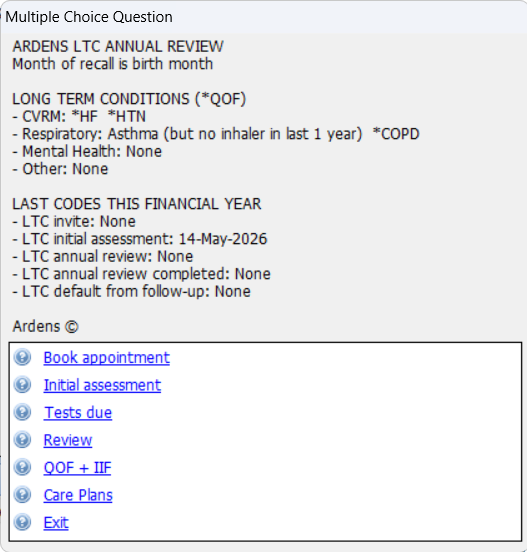
- Press F12 on your keyboard and select the Ardens Launcher - LTC Annual Review template launcher to access the templates (must be added to each individual users F12)
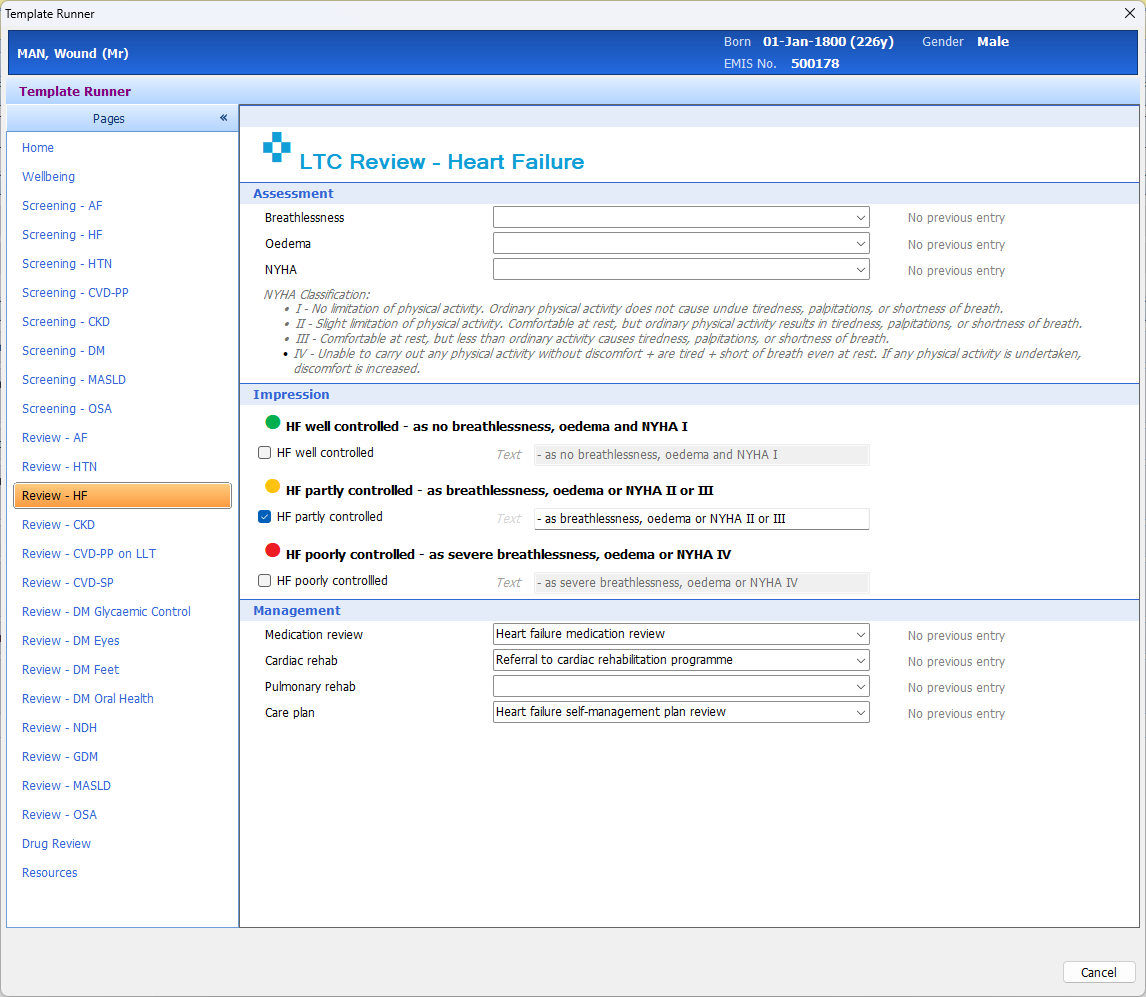
- Alternatively, pen a consultation, select Run Template and search for the LTC Initial Assessment (Ardens) or LTC Review template.
1. Plan
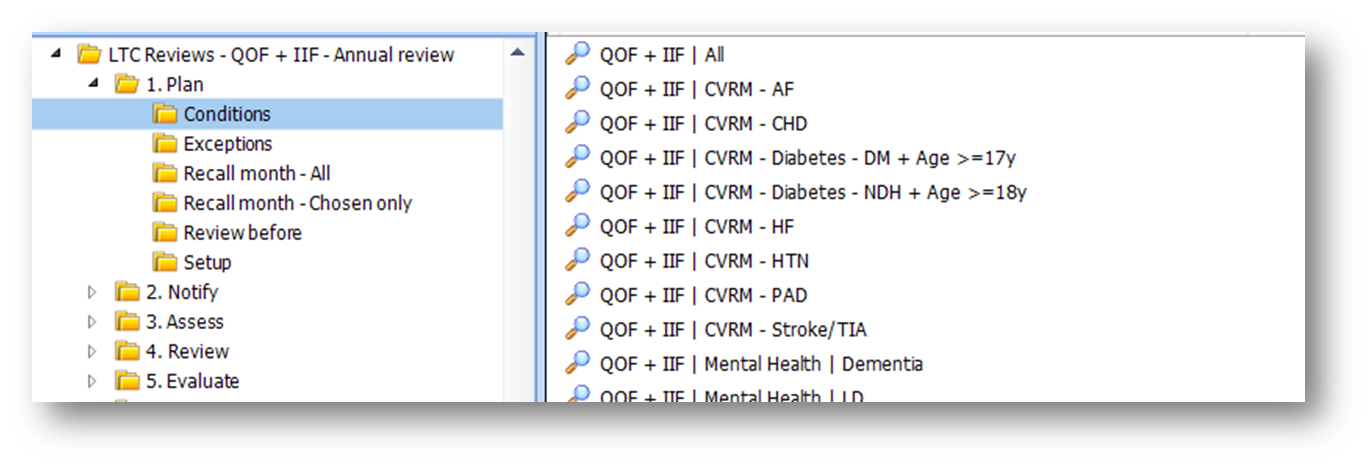
Conditions
Exceptions

Recall month
- Recall Month – All: Patients whose birthday falls in the month and who require a recall.
- Recall Month – Chosen Only: Patients seen in a month other than their birthday month, EMIS practices must add a recall diary entry to the patient record.
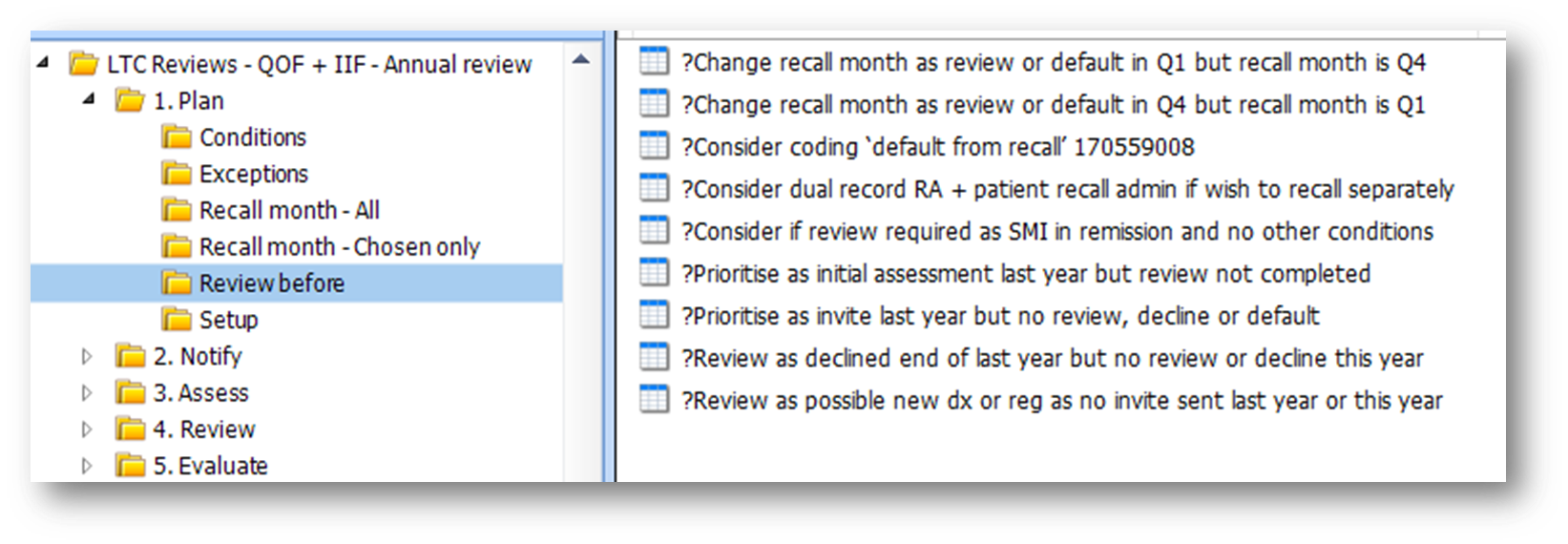
Review before
Setup
2. Notify
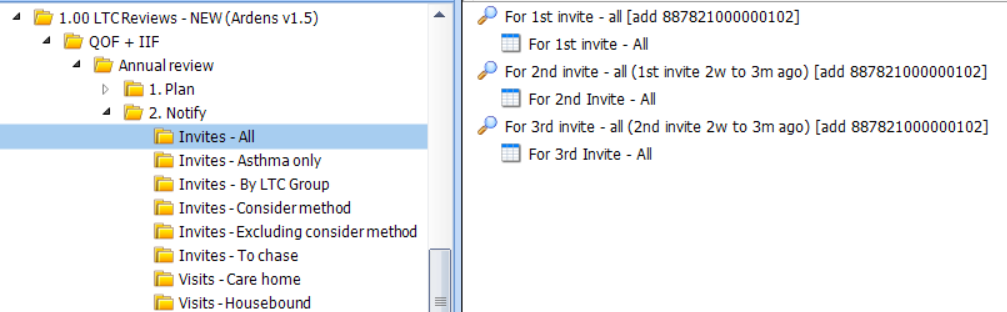
Invite
- All: Total number of all patients to be recalled in the chosen month (regardless of how many condition reviews) that require a first invite, or a second or third reminder.
- Asthma only: Patients who have asthma as their only recorded condition. GP Practices may choose to send a pre-assessment questionnaire to indicate whether a further review is needed, as they may not even need to come into the GP Practice at all for any tests.
- By LTC Group: For practices who wish to invite by condition group, this folder contains separate searches for patients requiring an invite for CVRM, Mental Health or Respiratory conditions. Please note that patients may appear in more than one search if they meet the criteria for multiple condition groups.
- Consider method: Patients who are 16 years and under, living with dementia, at the end of life, or have a learning disability. GP practices should consider the most appropriate way to inform these patients or their carers about their reviews.
- Excluding consider method: All patients who do not meet the consider method criteria and require a first invite, a second or a third reminder, regardless of how many condition reviews they have.
- To chase: Patients who have received multiple reminders but have not yet attended a review. This allows GP practices to follow up with these patients whenever possible to ensure they receive the care they need.
 Please note: Housebound patients or those in care homes are excluded from these reports and are included in the Visits reports.
Visits
- Care home residents (housebound / not housebound)
- Housebound but not in a care home
When a patient is invited for their LTC review, administrative staff must add the Chronic disease annual management review invitation code (887821000000102) to the patient record. This records that an invitation has been sent and ensures the patient progresses correctly through the LTC recall process.
3. Assess
Initial Assessments
- Record observations such as blood pressure, height, weight and BMI.
- Update lifestyle information (e.g. smoking status and alcohol intake).
- Request any required blood tests.
- Complete other relevant LTC information.
Once the assessment is complete, the Healthcare Assistant must select the Chronic disease initial assessment code. This code confirms that the patient’s initial assessment has been completed and ensures they move correctly through the LTC recall process.
 Please note: The template is smart working, and the conditions pages will only display if the patient is on the associated register.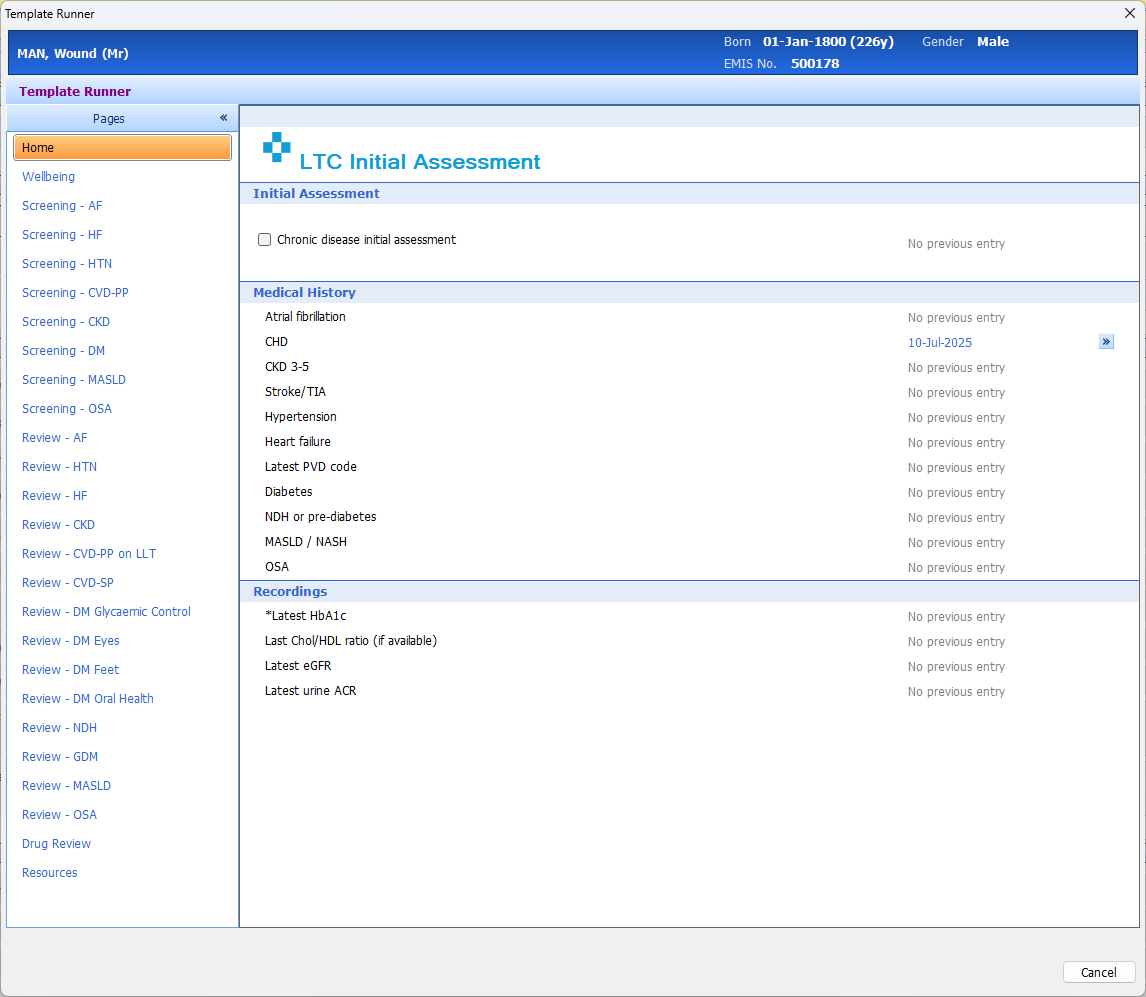
4. Review
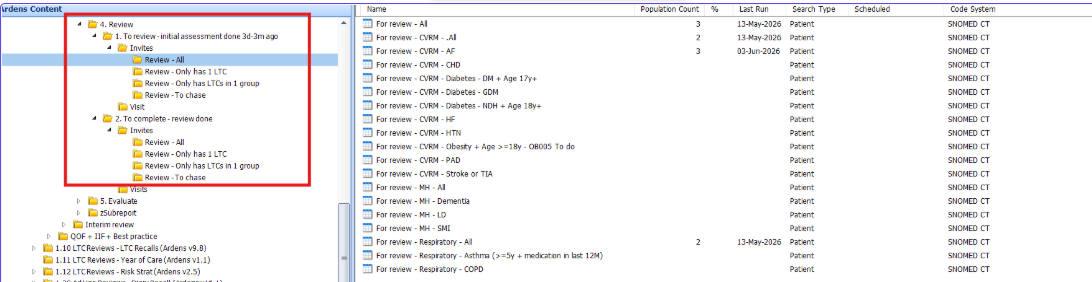
Reports are available to determine which patients have had an initial assessment and are due a full review.
Review
- All: Displays all patients due for review for a condition. This can then be further broken down by clinic groups: cardiovascular, mental health, respiratory or individual conditions.
- Only has 1 LTC: Identifies patients with only one long-term condition.
- Only has 1 LTC group: Identifies patients with conditions within the selected LTC group (e.g., cardiovascular condition).
- To chase: Displays patients who have received an initial assessment but have not yet had their review completed. This list helps clinicians identify patients who still require a full clinical review, ensuring that outstanding reviews are promptly followed up.
Visits
Review
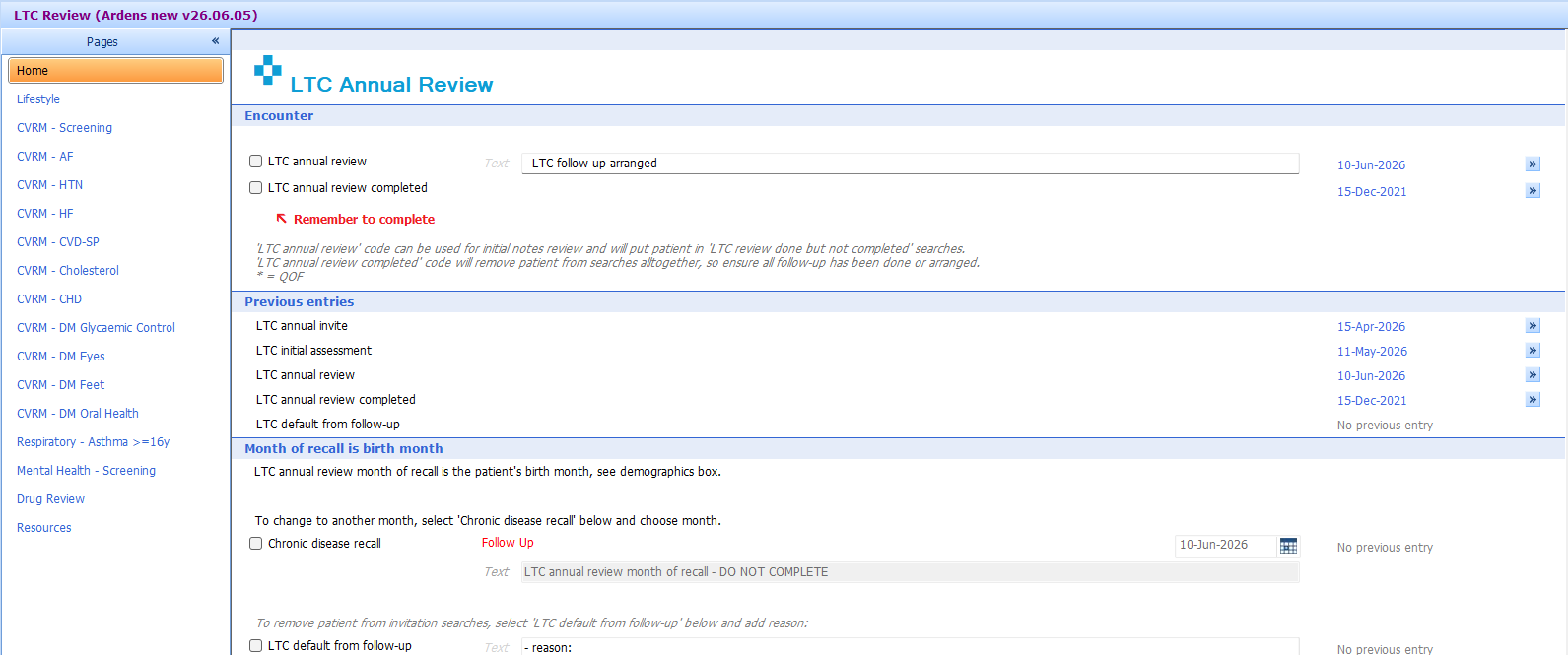
- Prompts for QOF and best-practice monitoring.
- Structured coding to support accurate records.
- Guidance for clinical decision-making and management plans.
- Risk stratification to identify patients at higher risk and support prioritisation of care.
- Chronic disease management annual review completed: For patients who have had all reviews completed.
- Chronic disease annual review: For patients whose reviews have been partially completed.
5. Evaluate
Activity

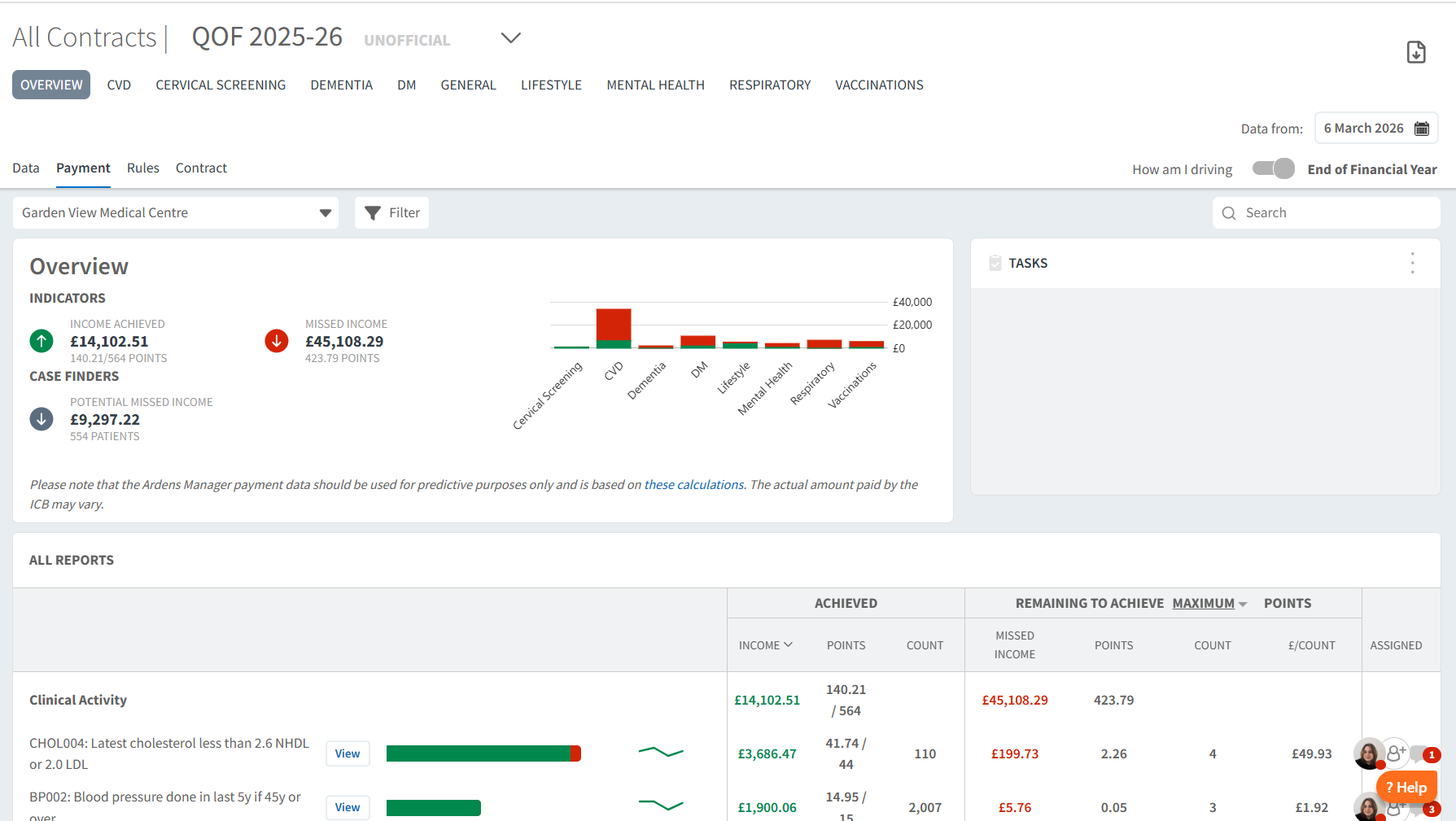
- Contract achievement: By threshold, financial value (£), and points.
- Outstanding work: Identifying tasks or reviews that are yet to be completed.
- Case finders: Highlighting patients who may require intervention.
The dashboard also allows you to filter and analyse data by:
- Demographics: Such as age, gender, or location
- Clinical risk groups: Helping to identify high-risk patients
Using these insights, practices can prioritise and target specific patient populations more effectively, ensuring resources are focused where they are most needed and supporting improved contract performance.
- Login to Ardens Manager.
- Go to Contracts on the left-hand pane.
FAQ
Additional Support
- EMIS LTC Recall Walkthrough Webinar
- Explore more helpful Support Articles.
- Book training for your GP Practice, PCN or ICB.